Physics 103 Virtual Laboratories
Experience Science Like Never Before
Our virtual laboratories provide students with immersive, hands-on science experiences without the limitations of physical lab spaces. Access cutting-edge experiments and simulations 24/7 from any device.
Each virtual lab is designed by experienced educators and scientists to align with curriculum standards while providing interactive learning opportunities that engage students in authentic scientific inquiry.
Available Virtual Labs
Explore our comprehensive collection of STEM laboratory simulations
Physics Laboratories
Thermodynamic Behavior of Gases
Study gas laws including Boyle's, Charles's, and the Ideal Gas Law.
30-45 minutesThermodynamic Cycles and Heat Engine Efficiency
Explore thermodynamic cycles and efficiency of heat engine systems.
30-45 minutesStanding Wave Patterns on a Vibrating String
Investigate harmonics, nodes, antinodes, and wave properties on strings.
30-45 minutesResonance of Standing Waves in Air Columns
Study sound wave resonance in open and closed air columns.
30-45 minutesFrequency Shift and the Doppler Phenomenon
Observe frequency changes for moving sound and light sources.
30-45 minutesFundamental Experiments in Electrostatics
Explore electric charge, conductors, insulators, and charging methods.
30-45 minutesExperimental Verification of Coulomb’s Law
Measure electrostatic forces between charged objects at various distances.
30-45 minutesElectric Potential Mapping and Equipotential Lines
Visualize and measure equipotential lines around charged configurations.
30-45 minutesDeterminants of Electrical Resistance
Investigate how material, length, area, and temperature affect resistance.
30-45 minutesComparative Analysis of Series and Parallel Circuits
Analyze current, voltage, and resistance in different circuit configurations.
30-45 minutesElectromagnetic Induction with a Moving Magnet
Demonstrate electromagnetic induction using relative motion of magnets and coils.
30-45 minutesInduced EMF in Alternating Magnetic Fields
Study induced EMF and currents in time-varying magnetic fields.
30-45 minutesEnergy Storage in Capacitors and Inductors
Explore energy storage in electric and magnetic fields.
30-45 minutesResonance and Phase in RLC Circuits
Investigate resonance, damping, and phase relationships in AC circuits.
30-45 minutesImage Formation by Curved Mirrors
Study image formation using concave and convex mirrors.
30-45 minutesReal Image Formation with Thin Lenses
Investigate real image formation using converging lenses.
30-45 minutesVirtual Image Formation with Thin Lenses
Study virtual image formation with diverging and converging lenses.
30-45 minutesOptical Effects of Aperture and Depth of Field
Explore how aperture size affects focus and depth in optical systems.
30-45 minutesWave Interference Patterns in Light
Study wave interference patterns from coherent light sources.
30-45 minutesDiffraction of Waves Through Openings
Investigate wave bending around obstacles and through apertures.
30-45 minutesEmission Spectrum of Hydrogen Atoms
Analyze emission lines to study electron transitions in hydrogen atoms.
30-45 minutesDetermination of Planck’s Constant
Determine Planck's constant using photoelectric effect or LED methods.
30-45 minutes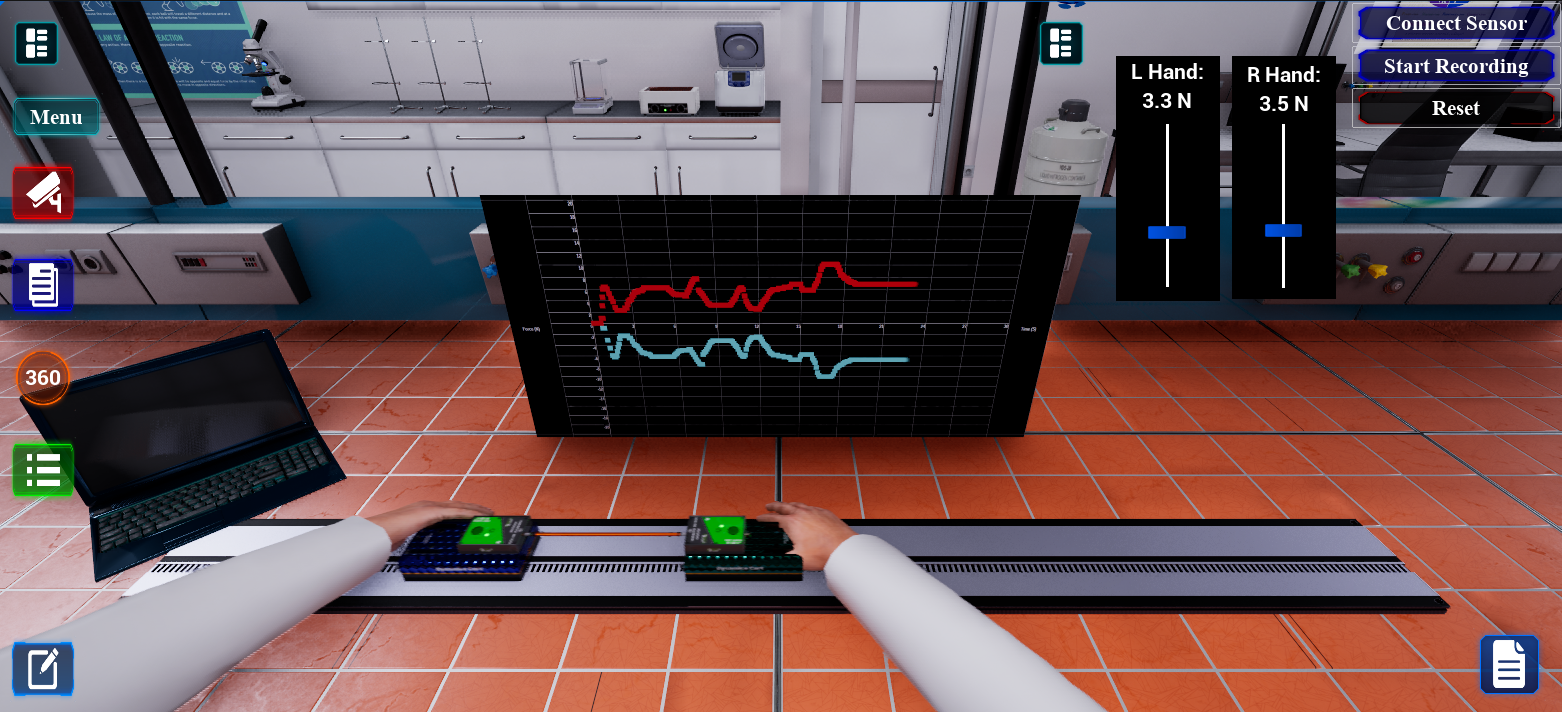
Interactive Learning
Students engage with realistic lab equipment and procedures
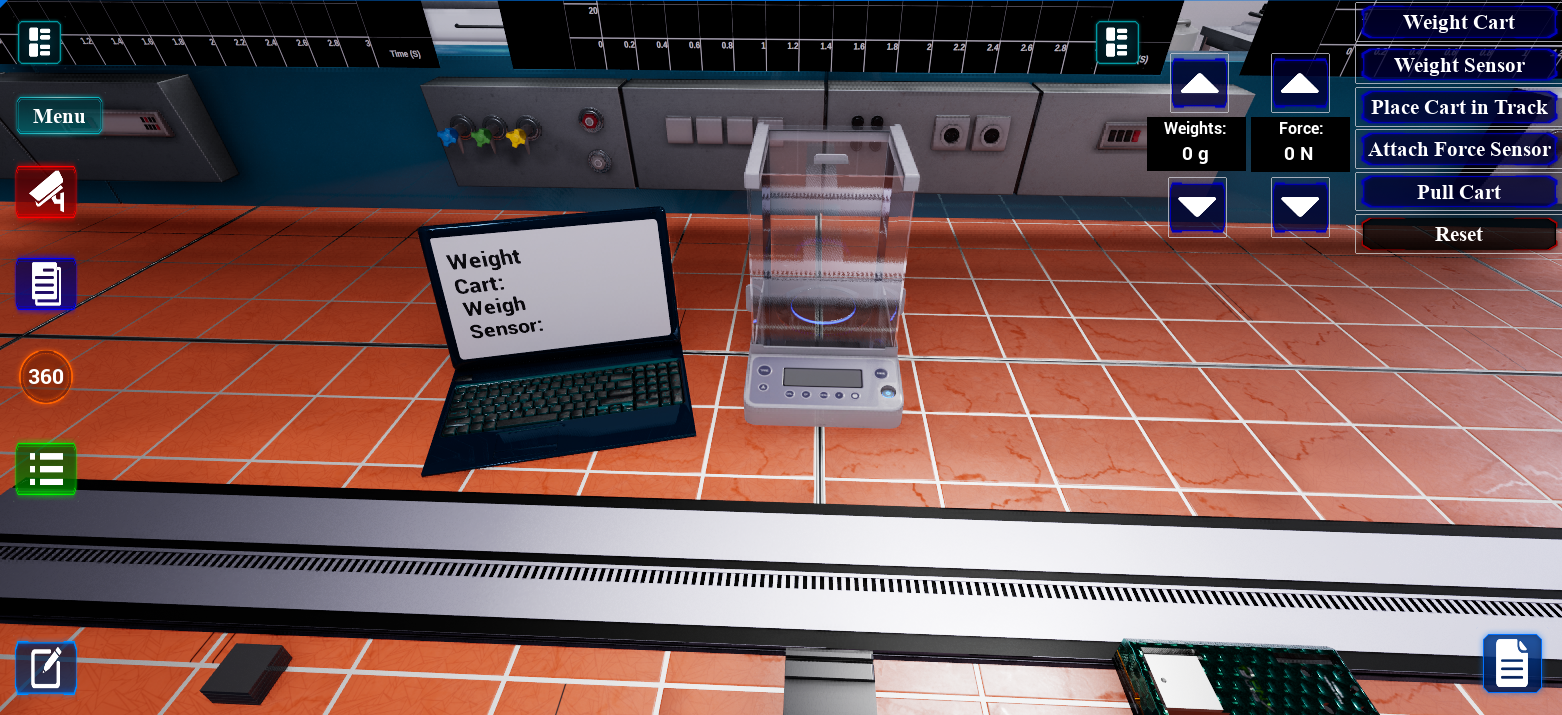
Real-time Data
Collect and analyze data just like in a physical laboratory
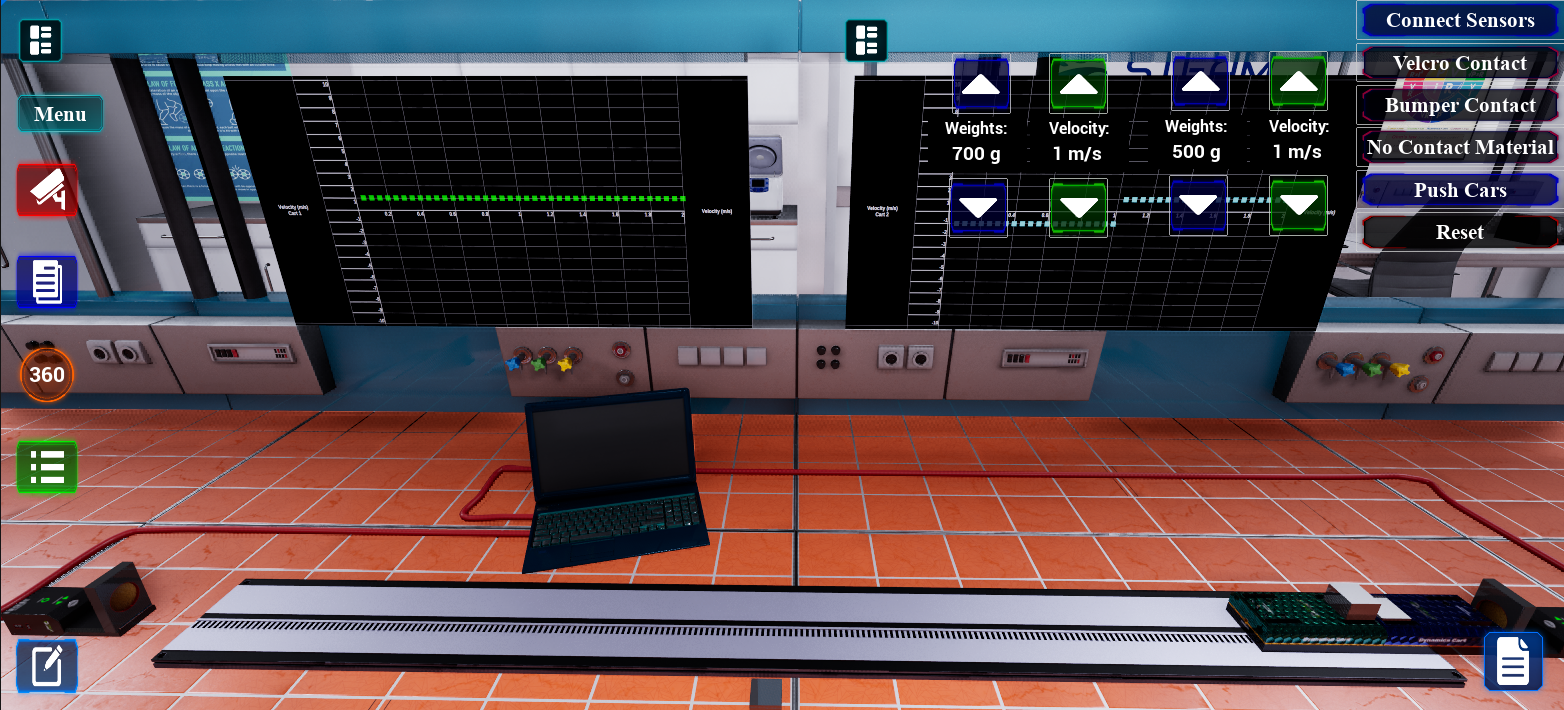
Unlimited Flexibility
Change variables to replicate scenarios that are impossible in a physical lab