Chemistry 101 Virtual Laboratories
Experience Science Like Never Before
Our virtual laboratories provide students with immersive, hands-on science experiences without the limitations of physical lab spaces. Access cutting-edge experiments and simulations 24/7 from any device.
Each virtual lab is designed by experienced educators and scientists to align with curriculum standards while providing interactive learning opportunities that engage students in authentic scientific inquiry.
Available Virtual Labs
Explore our comprehensive collection of STEM laboratory simulations
Chemistry Laboratories
Thermal Energy Changes in Chemical Reactions
Measure temperature changes during chemical processes that absorb or release heat.
30-45 minutesPhase Transitions of Water: Freezing and Melting
Observe phase changes and measure the freezing/melting point of water.
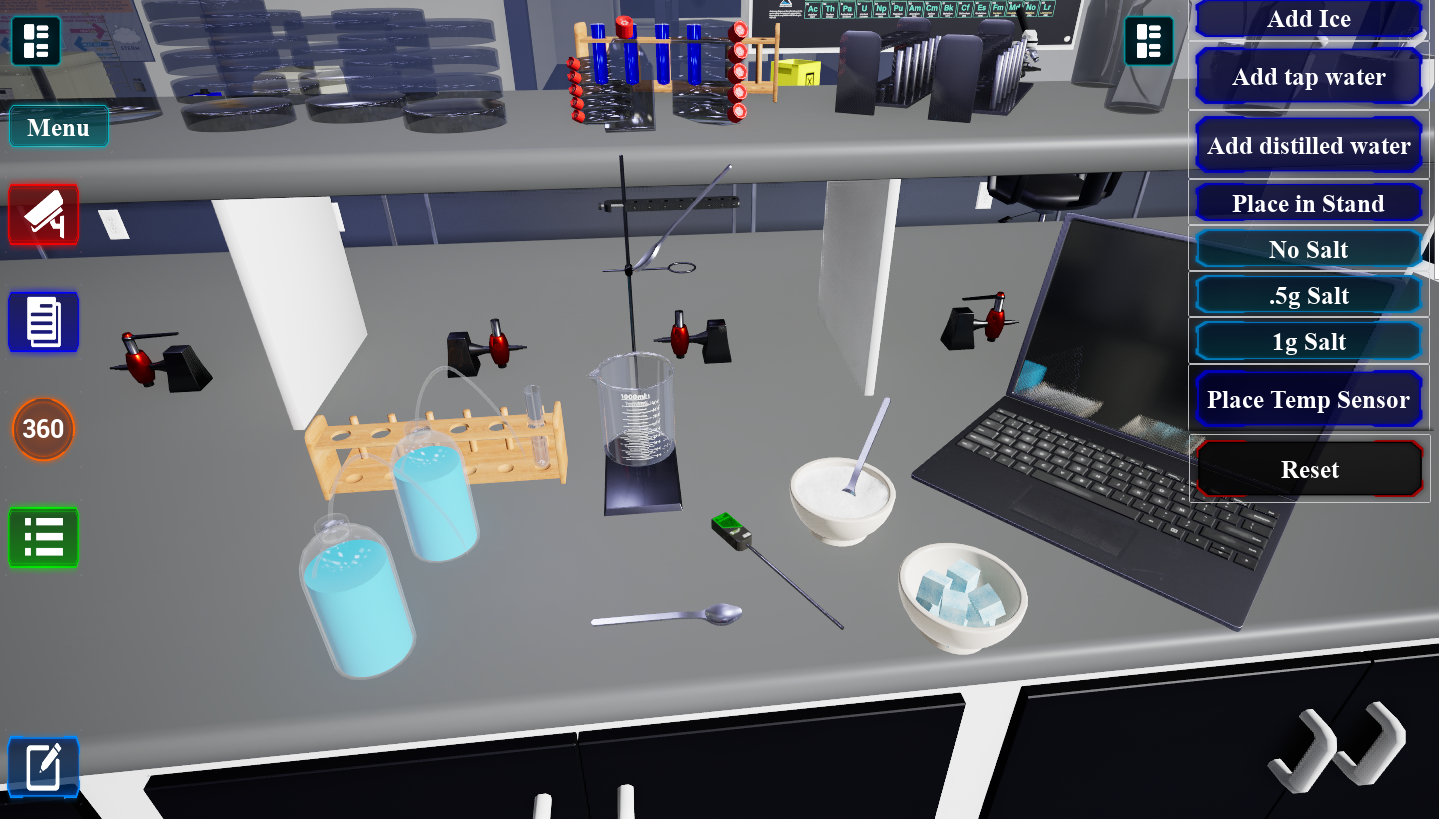
30-45 minutesFreezing Point Variations in Solutions
Investigate how impurities affect the freezing point of substances.
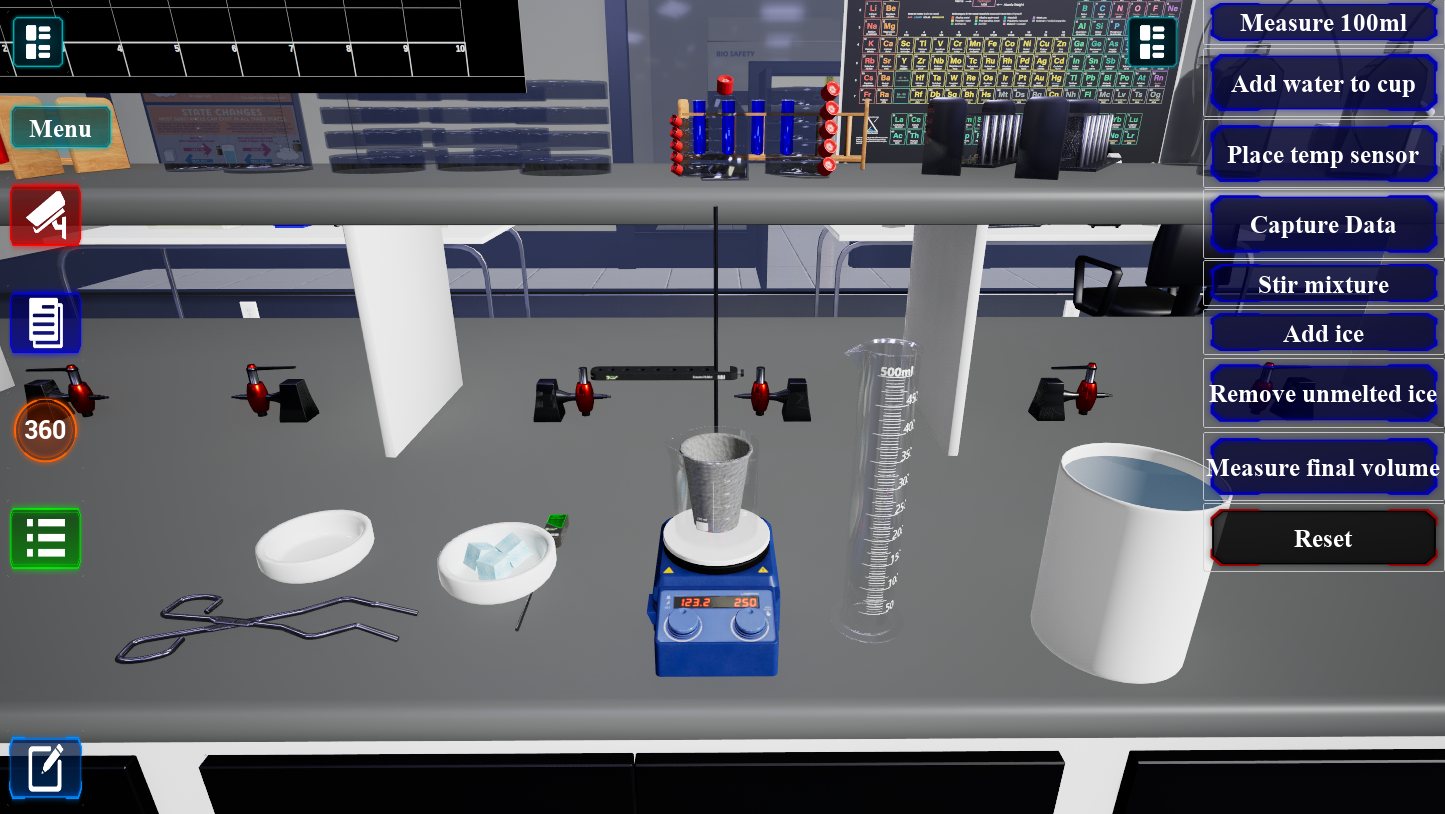
30-45 minutesDetermining the Heat of Fusion of Ice
Calculate the energy required to melt ice without changing its temperature.
30-45 minutesExperimental Data Interpretation Through Graphing
Develop skills in interpreting experimental data through graphical methods.
30-45 minutesPressure–Volume Relationship in Gases
Verify the inverse relationship between gas pressure and volume at constant temperature.
30-45 minutesPressure–Temperature Dependence in Gas Systems
Investigate Gay-Lussac's Law showing direct proportionality between pressure and temperature.
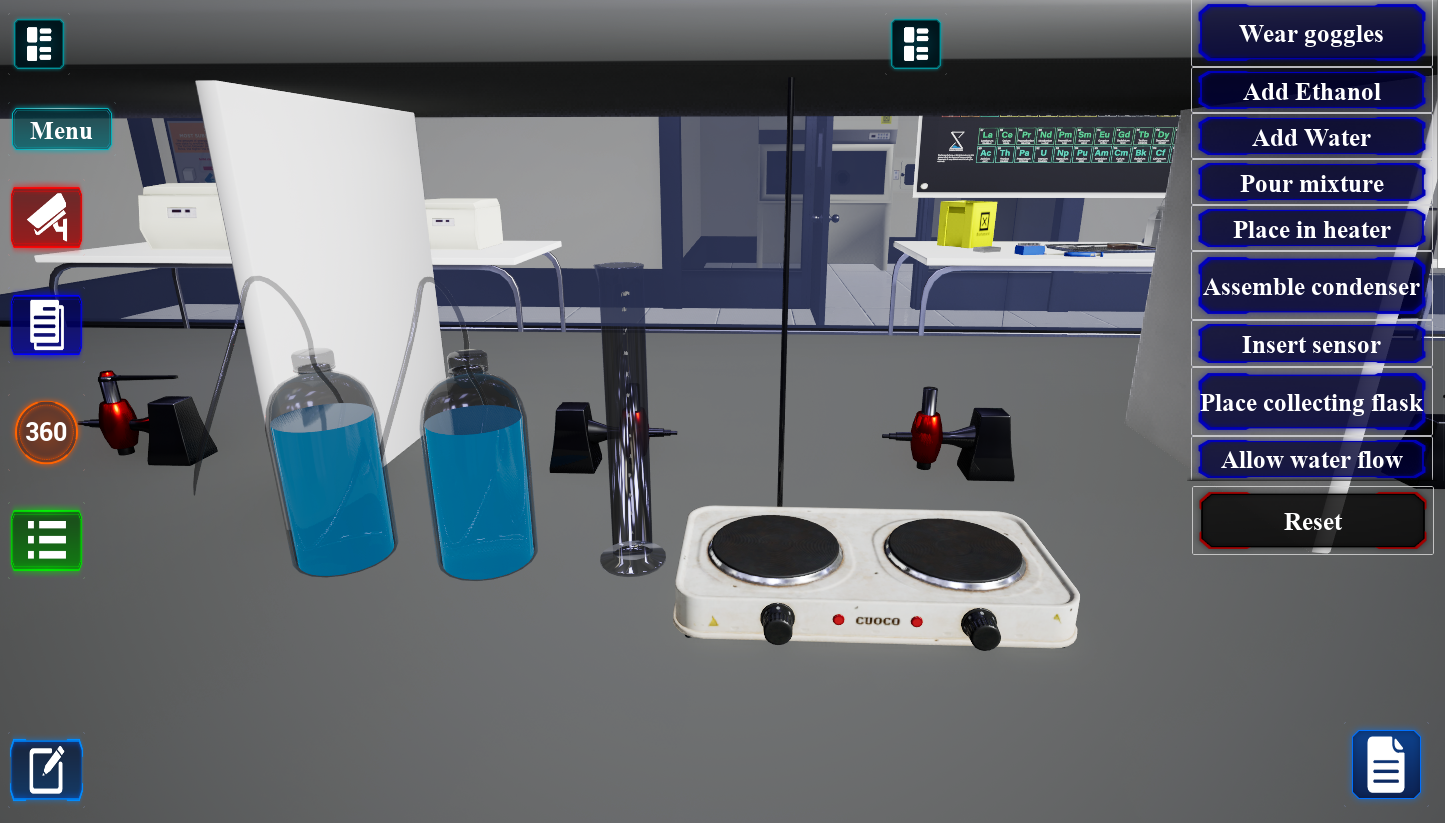
30-45 minutesSeparation of Liquid Mixtures by Fractional Distillation
Separate liquid mixtures based on differences in boiling points.
30-45 minutesEvaporation Rates and Intermolecular Forces
Study how molecular forces affect evaporation rates of different liquids.
30-45 minutesTemperature Dependence of Vapor Pressure
Measure vapor pressure at different temperatures and understand its relationship with boiling point.
30-45 minutesSolution Concentration Determination Using Beer’s Law
Use spectrophotometry to determine unknown concentrations of colored solutions.
30-45 minutesTemperature Effects on Salt Solubility
Investigate how temperature changes affect the maximum amount of solute that dissolves.
30-45 minutesElectrical Properties of Electrolyte Solutions
Test substances to determine their ability to conduct electricity in solution.
30-45 minutesEffect of Concentration on Solution Conductivity
Measure how solution concentration affects electrical conductivity.
30-45 minutesMolar Mass Determination by Freezing Point Depression
Calculate molar mass by measuring how solutes lower freezing points.
30-45 minutesCalorimetric Determination of Food Energy
Measure the caloric content of different food samples using calorimetry.
30-45 minutesCombustion Energy of Fuels
Compare the heat released by combustion of different fuel samples.
30-45 minutesVerification of Hess’s Law of Heat Summation
Verify that enthalpy change is independent of reaction pathway.
30-45 minutesEnthalpy of Combustion for Magnesium
Determine the enthalpy of combustion for magnesium metal.
30-45 minutesDetermination of the Chemical Equilibrium Constant
Determine equilibrium constants for reversible reactions.
30-45 minutesAcid–Base Properties of Household Substances
Test common household substances to determine their pH and acid-base properties.
30-45 minutesChemical Effects of Simulated Acid Rain
Simulate and measure the effects of acid rain on different materials.
30-45 minutespH Curve Analysis for Acid–Base Titrations
Generate and analyze pH curves to distinguish between strong and weak acid-base systems.
30-45 minutesQuantitative Determination by Acid–Base Titration
Determine unknown concentrations using standardized titrations.
30-45 minutesIdentification of Diprotic Acids by Titration
Analyze titration curves to identify acids with two dissociable protons.
30-45 minutesConductometric Determination of Titration Endpoints
Determine titration endpoints through changes in solution conductivity.
30-45 minutesDetermination of the Acid Dissociation Constant (Ka)
Calculate the equilibrium constant for weak acid dissociation.
30-45 minutesElectrochemical Measurement of Reduction Potentials
Construct electrochemical cells to measure and compare standard reduction potentials.
30-45 minutesChemistry and Operation of Lead–Acid Batteries
Study the chemistry and performance characteristics of lead-acid batteries.
30-45 minutesKinetic Analysis of the Crystal Violet Reaction
Determine reaction order and rate constant through colorimetric analysis.
30-45 minutesDissolution Kinetics of Time‑Release Vitamin C
Analyze the dissolution kinetics of controlled-release vitamin formulations.
30-45 minutesBuffer Systems in Citric Acid Solutions
Investigate the buffering capacity of citric acid systems in beverages.
30-45 minutesQuantitative Analysis of Free Chlorine in Pool Water
Use colorimetric titration to measure chlorine concentration in water samples.
30-45 minutesSpectrophotometric Determination of Iron in Supplements
Use spectrophotometry to quantify iron content in commercial supplements.
30-45 minutesPhosphoric Acid Quantification in Soft Drinks
Titrate cola beverages to measure their phosphoric acid concentration.
30-45 minutesPrecision Acid–Base Titration Using Microscale Methods
Perform precise titrations using small reagent volumes and specialized equipment.
30-45 minutes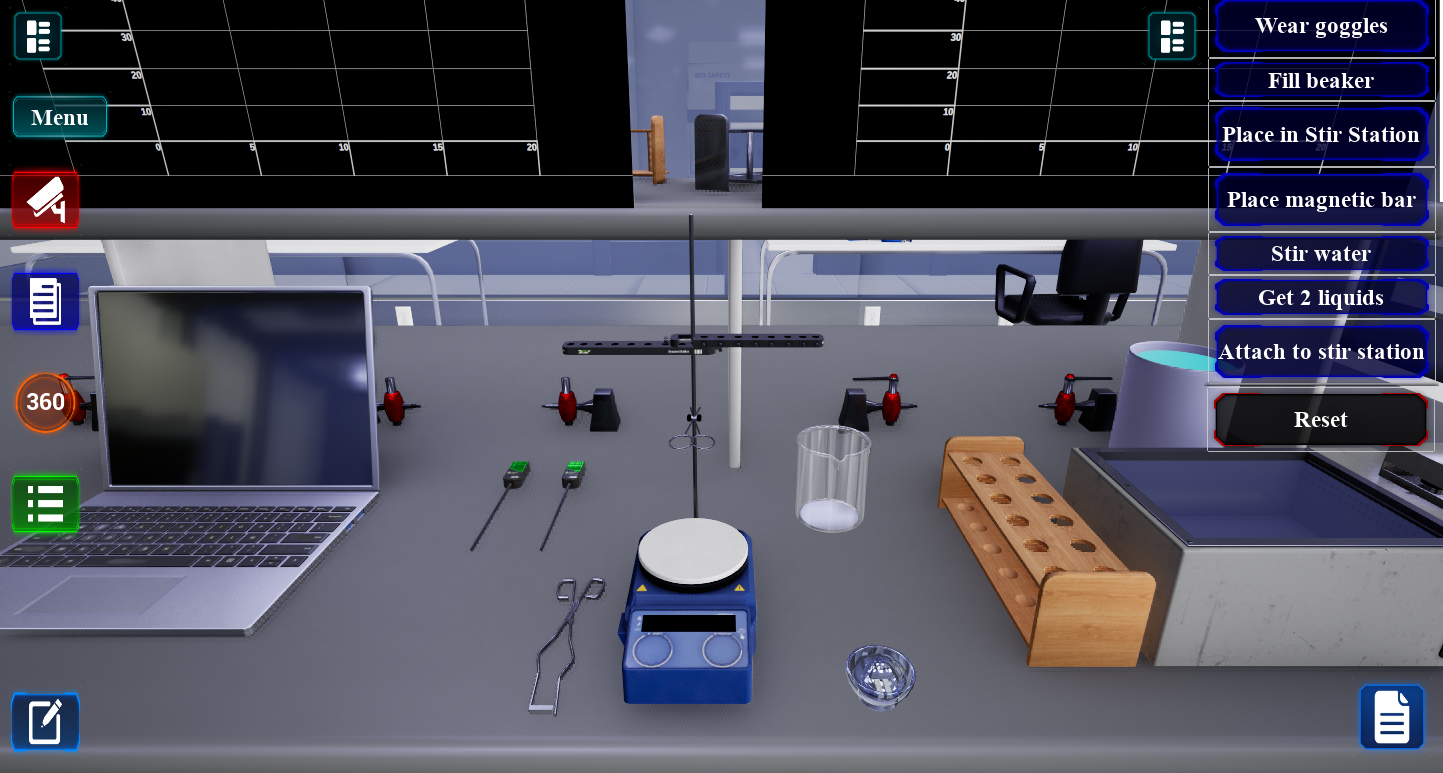
Interactive Learning
Students engage with realistic lab equipment and procedures
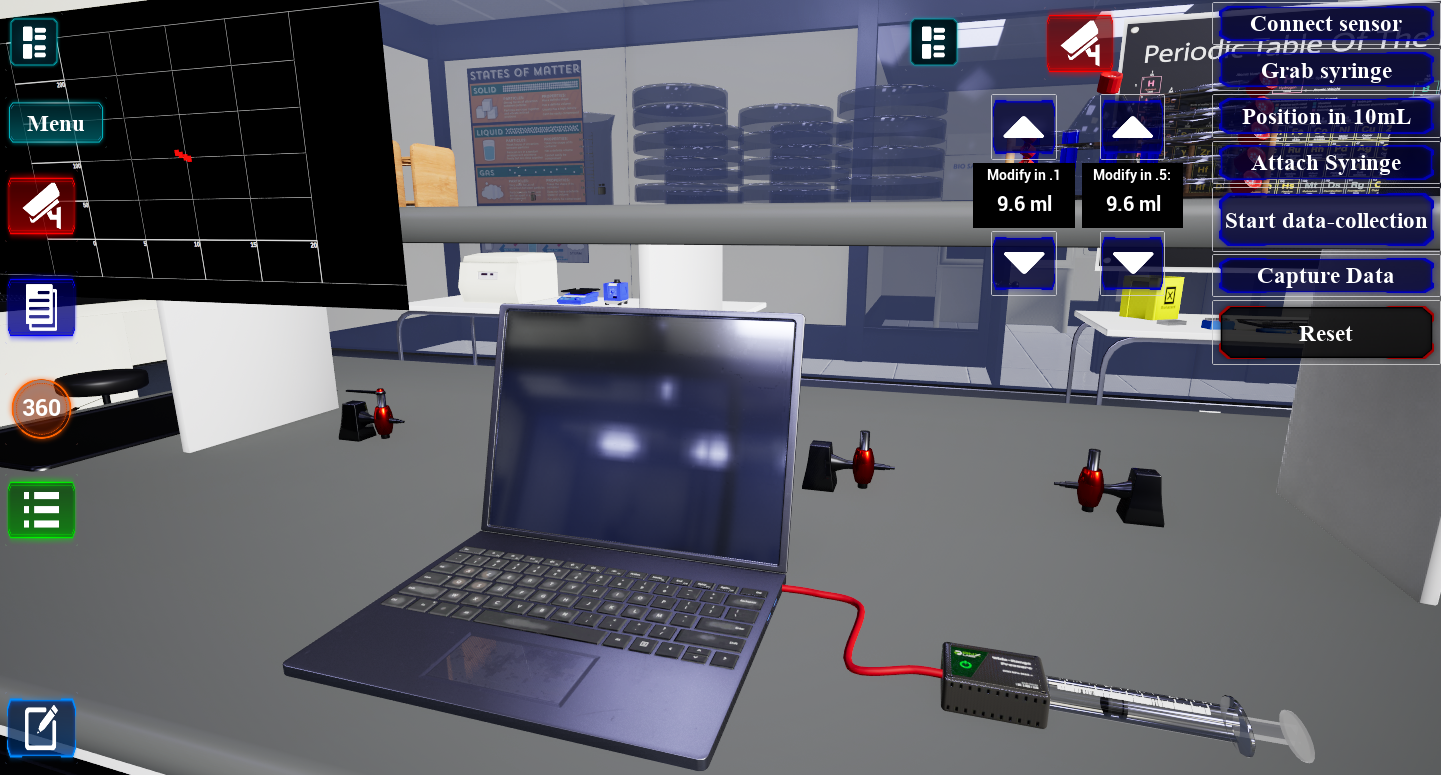
Real-time Data
Collect and analyze data just like in a physical laboratory
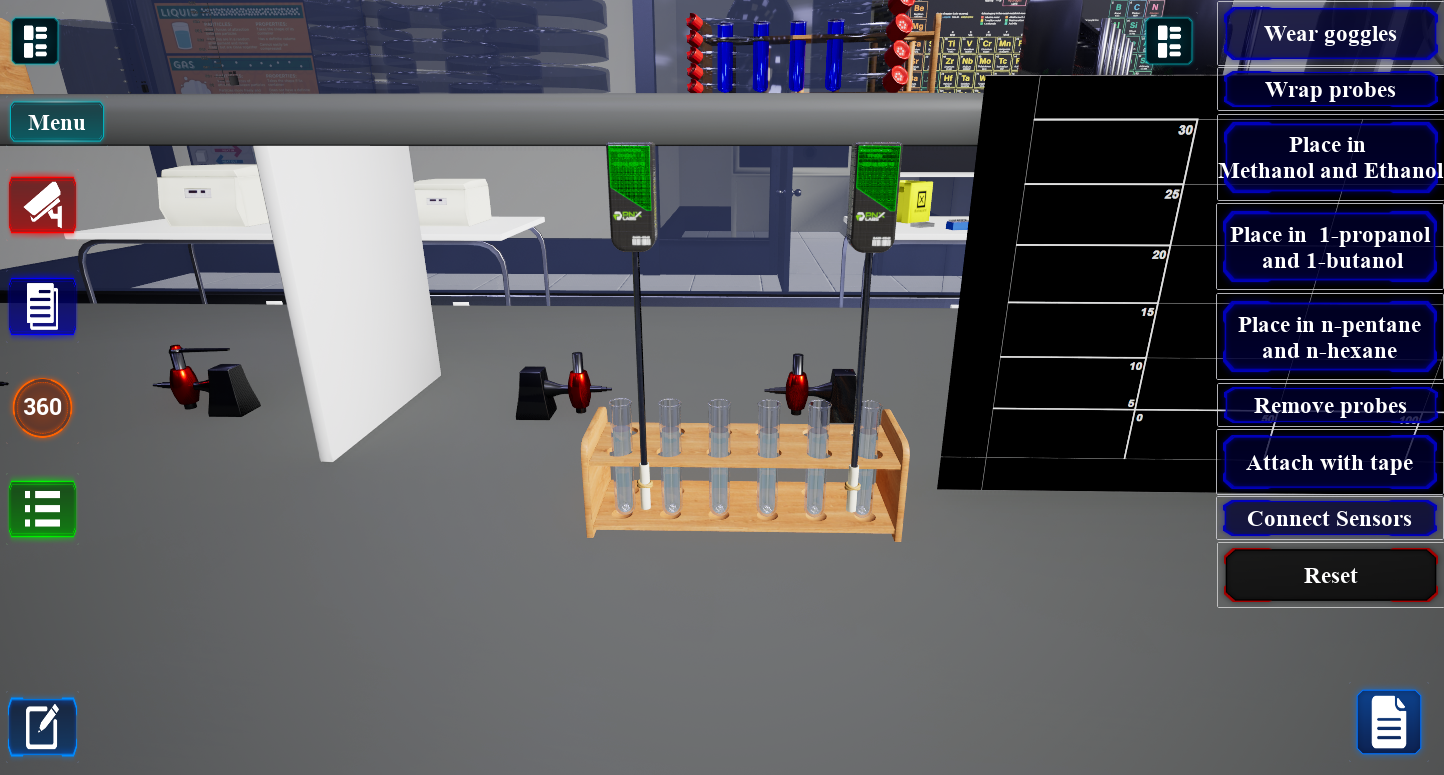
Unlimited Flexibility
Change variables to replicate scenarios that are impossible in a physical lab