Physics 102 Virtual Laboratories
Experience Science Like Never Before
Our virtual laboratories provide students with immersive, hands-on science experiences without the limitations of physical lab spaces. Access cutting-edge experiments and simulations 24/7 from any device.
Each virtual lab is designed by experienced educators and scientists to align with curriculum standards while providing interactive learning opportunities that engage students in authentic scientific inquiry.
Available Virtual Labs
Explore our comprehensive collection of STEM laboratory simulations
Physics Laboratories
Dynamics of Motion on an Inclined Plane
Study acceleration and forces on objects moving along inclined planes.
30-45 minutesMeasurement Uncertainty and Error Evaluation
Learn techniques for quantifying and analyzing measurement uncertainties.
30-45 minutesExperimental Demonstration of Newton’s First Law
Demonstrate inertia and the concept of objects at rest staying at rest.
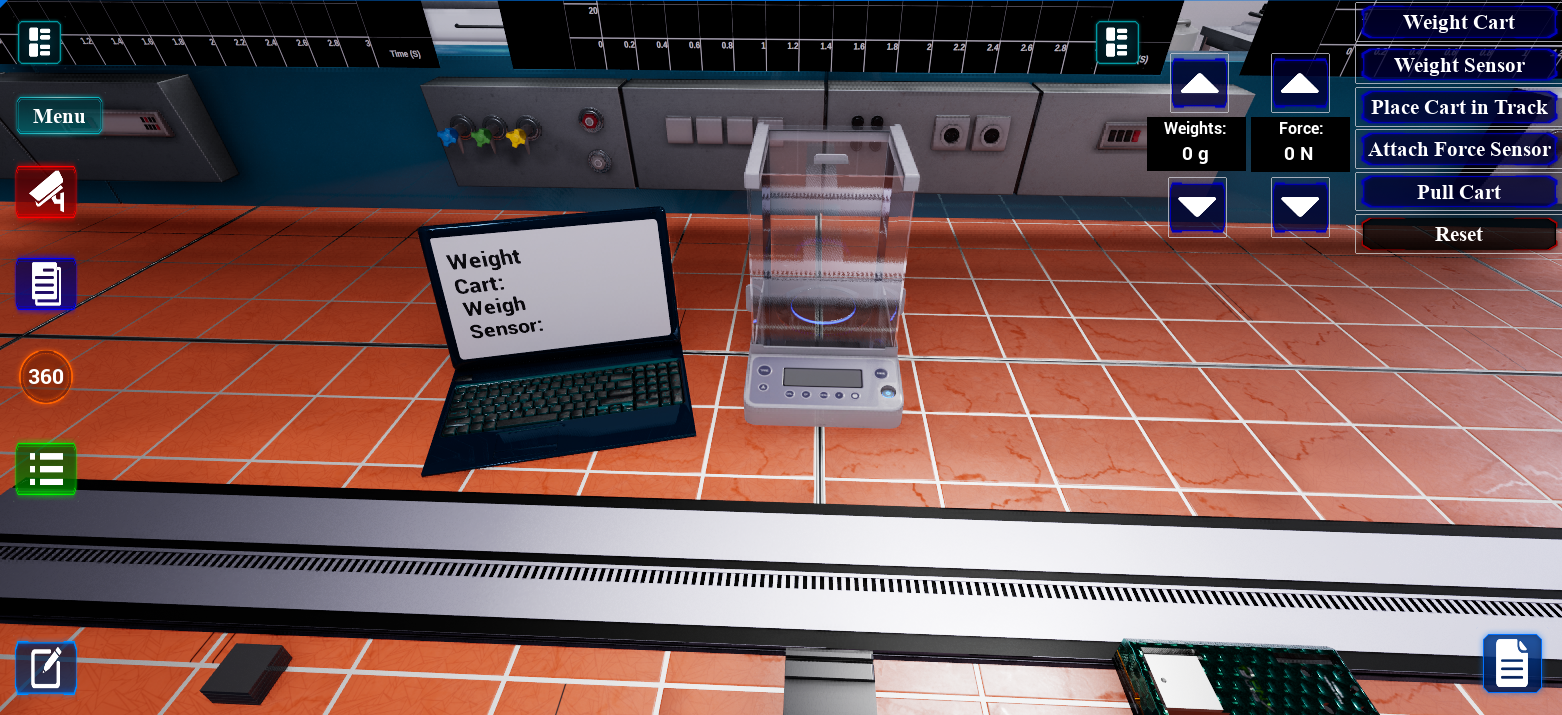
30-45 minutesForce–Mass–Acceleration Relationship Study
Investigate the relationship between force, mass, and acceleration.
30-45 minutesInvestigation of Action–Reaction Forces
Explore action-reaction force pairs and their applications.
30-45 minutesAnalysis of Two‑Dimensional Projectile Motion
Analyze the trajectory of objects launched at angles under gravity.
30-45 minutesElastic Potential Energy in Deformed Systems
Study energy storage in springs and elastic materials.
30-45 minutesQuantitative Study of Kinetic Energy
Investigate the energy of motion and its relationship to mass and velocity.
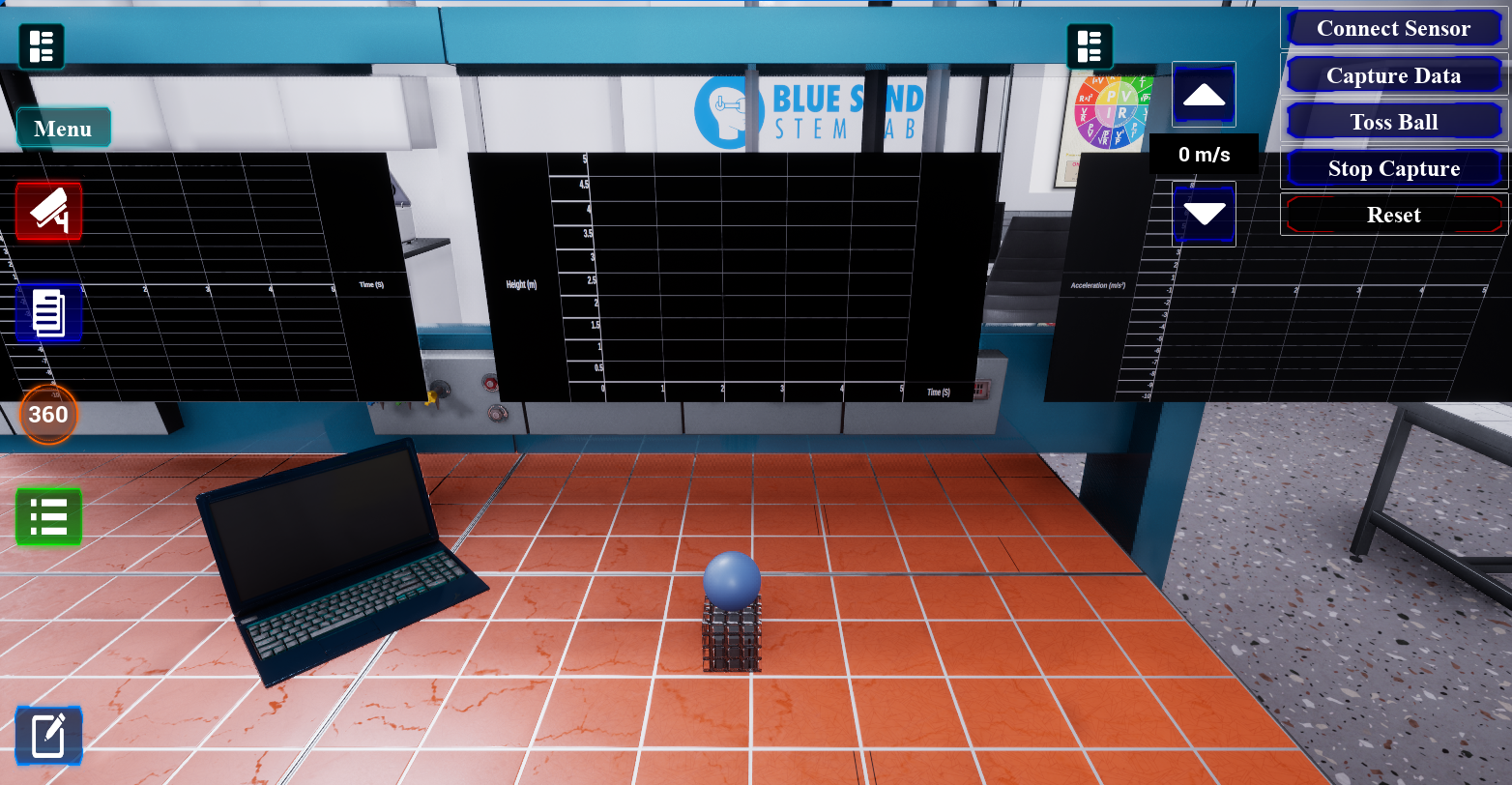
30-45 minutesGravitational Potential Energy and Height
Explore potential energy due to height in a gravitational field.
30-45 minutesImpulse–Momentum Theorem Investigation
Examine the relationship between force, time, and change in momentum.
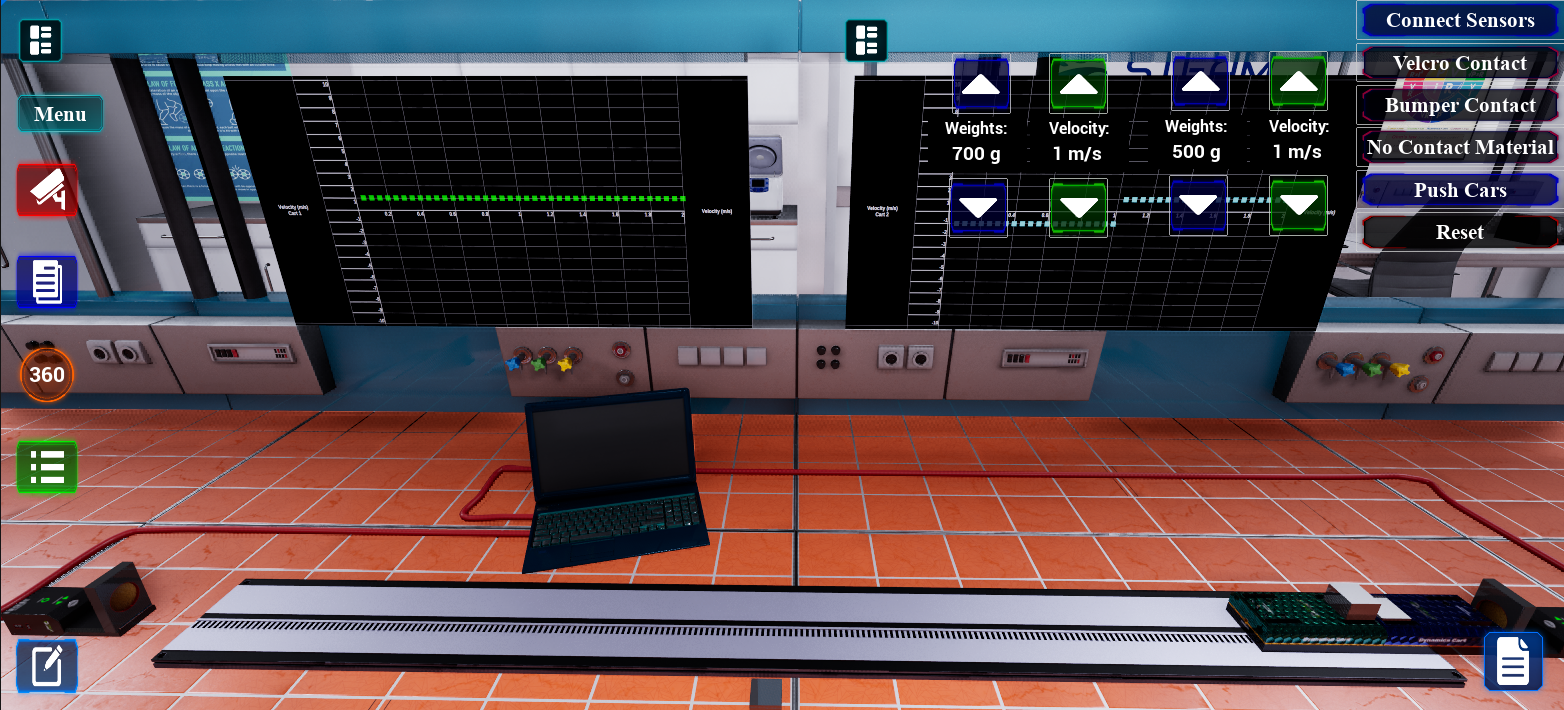
30-45 minutesMomentum Conservation in Collisions
Study conservation of momentum in elastic and inelastic collisions.
30-45 minutesCentripetal Acceleration Using a Rotational Apparatus
Measure centripetal force and relate it to mass, radius, and angular velocity.
30-45 minutesCentripetal Motion Investigated with a Pendulum
Use pendulum motion to study centripetal forces and circular motion principles.
30-45 minutesPrinciples of Rotational Dynamics
Investigate torque, rotational inertia, and angular acceleration.
30-45 minutesAngular Momentum Conservation in Rotating Systems
Demonstrate how rotational systems conserve angular momentum.
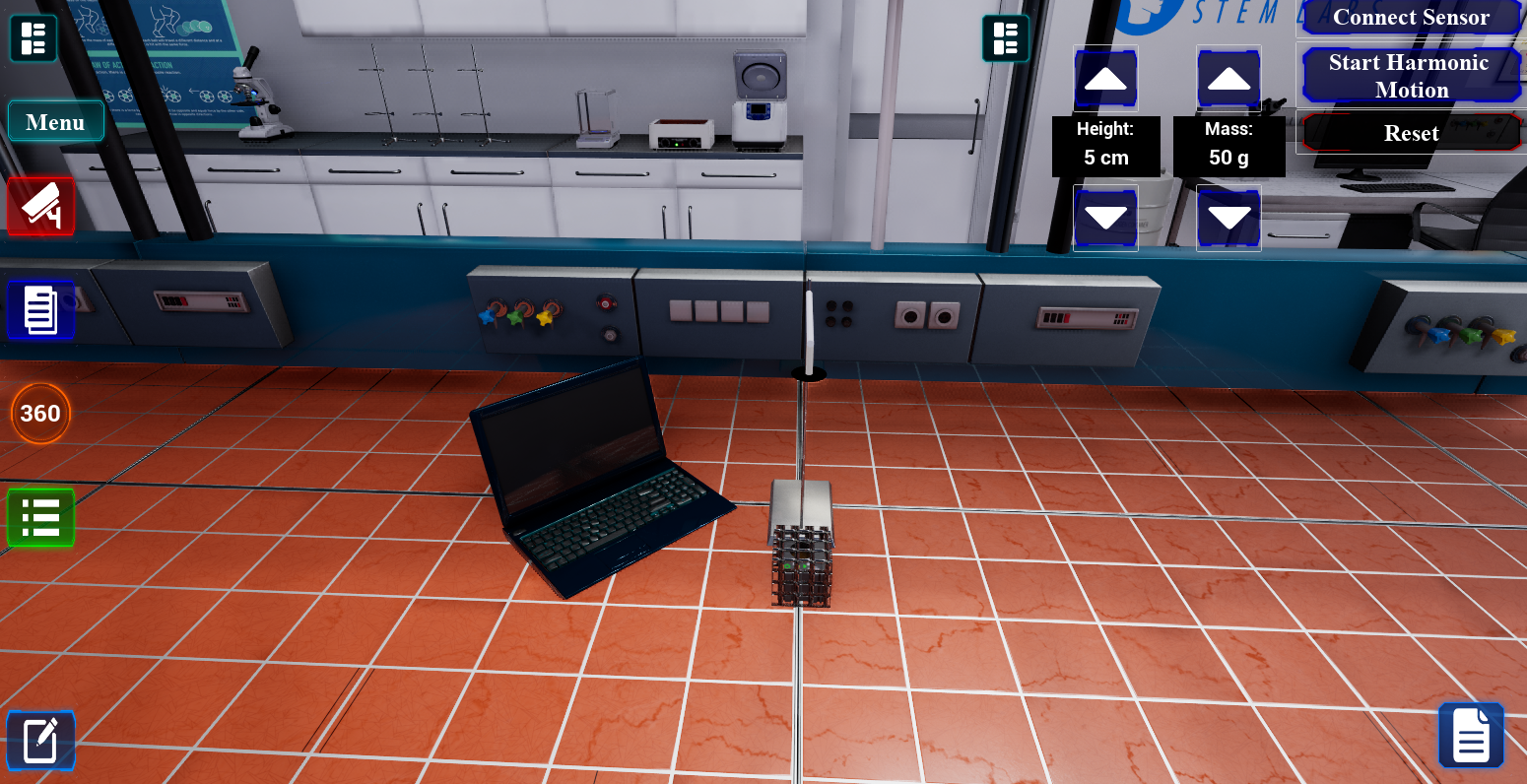
30-45 minutesMathematical Modeling of Simple Harmonic Motion
Develop and analyze mathematical equations describing oscillatory motion.
30-45 minutesKinematic and Dynamic Analysis of Harmonic Motion
Study position, velocity, acceleration, and forces in oscillating systems.
30-45 minutesPeriod Dependence in Pendulum Motion
Investigate factors affecting the period of a simple pendulum.
30-45 minutesDynamics of a Physical Pendulum
Analyze the motion of extended objects swinging as pendulums.
30-45 minutesDetermination of the Center of Mass
Locate and analyze the center of mass for various objects and systems.
30-45 minutes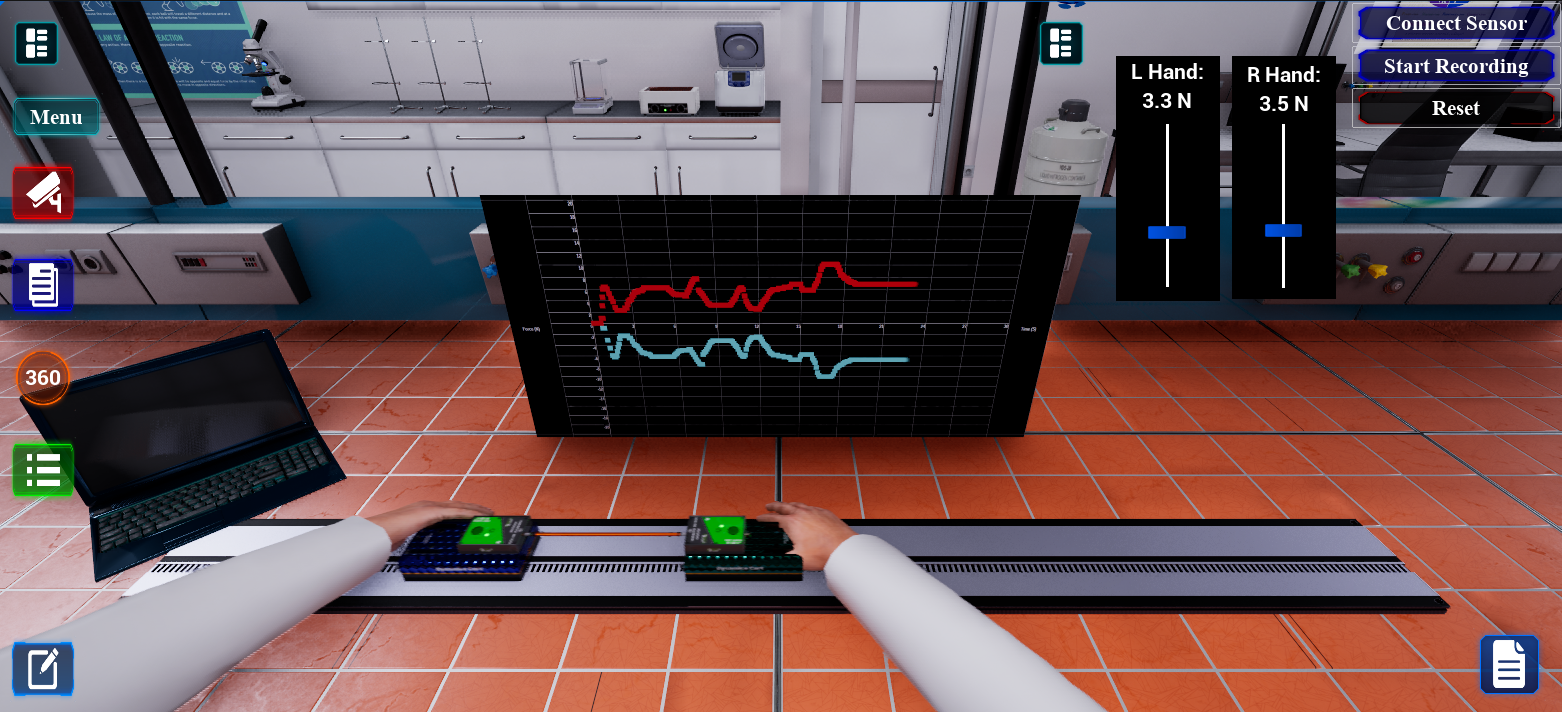
Interactive Learning
Students engage with realistic lab equipment and procedures
Real-time Data
Collect and analyze data just like in a physical laboratory
Unlimited Flexibility
Change variables to replicate scenarios that are impossible in a physical lab